
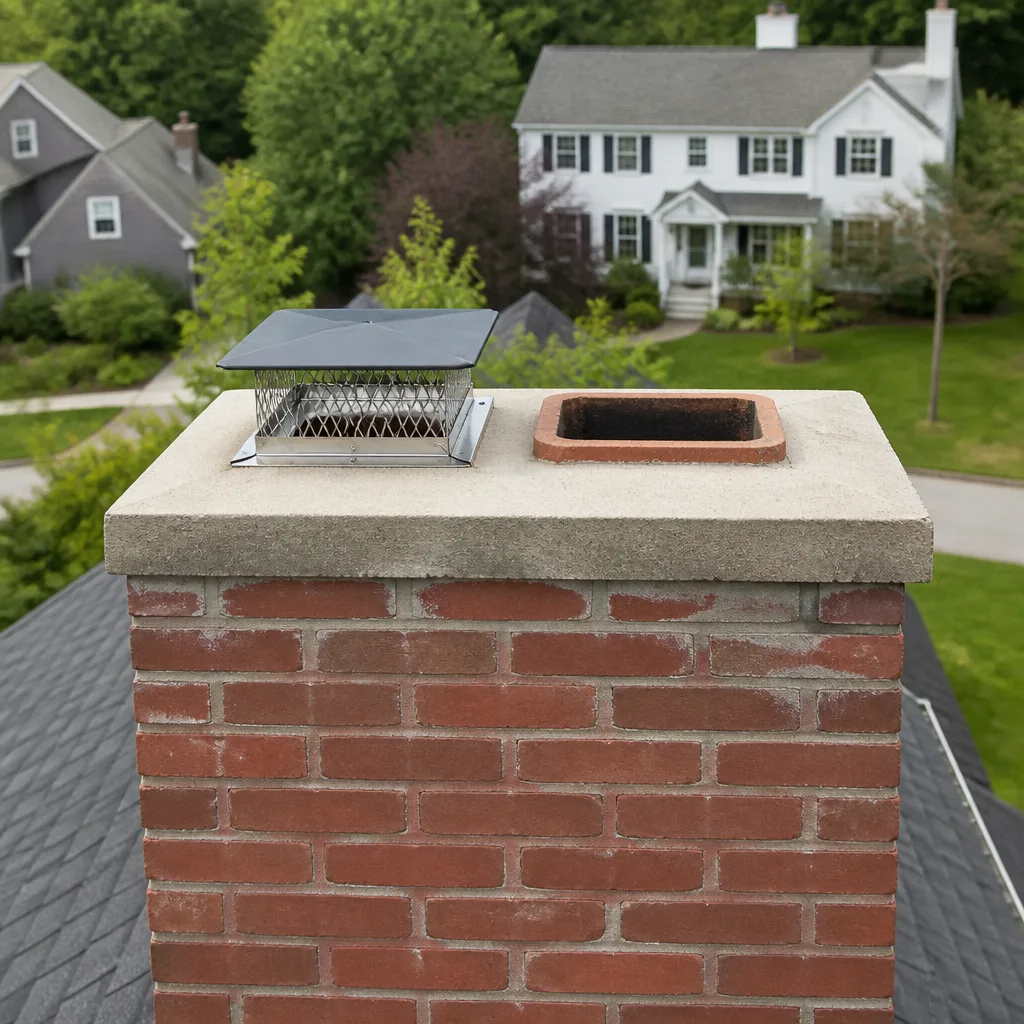
Level 1 sweep and inspection to the NFPA 211 annual standard - flue, crown, cap, and flashing checked and photographed
Chimney sweep logs do not sweep chimneys. They loosen some creosote - which then falls where a brush and vacuum still have to collect it.
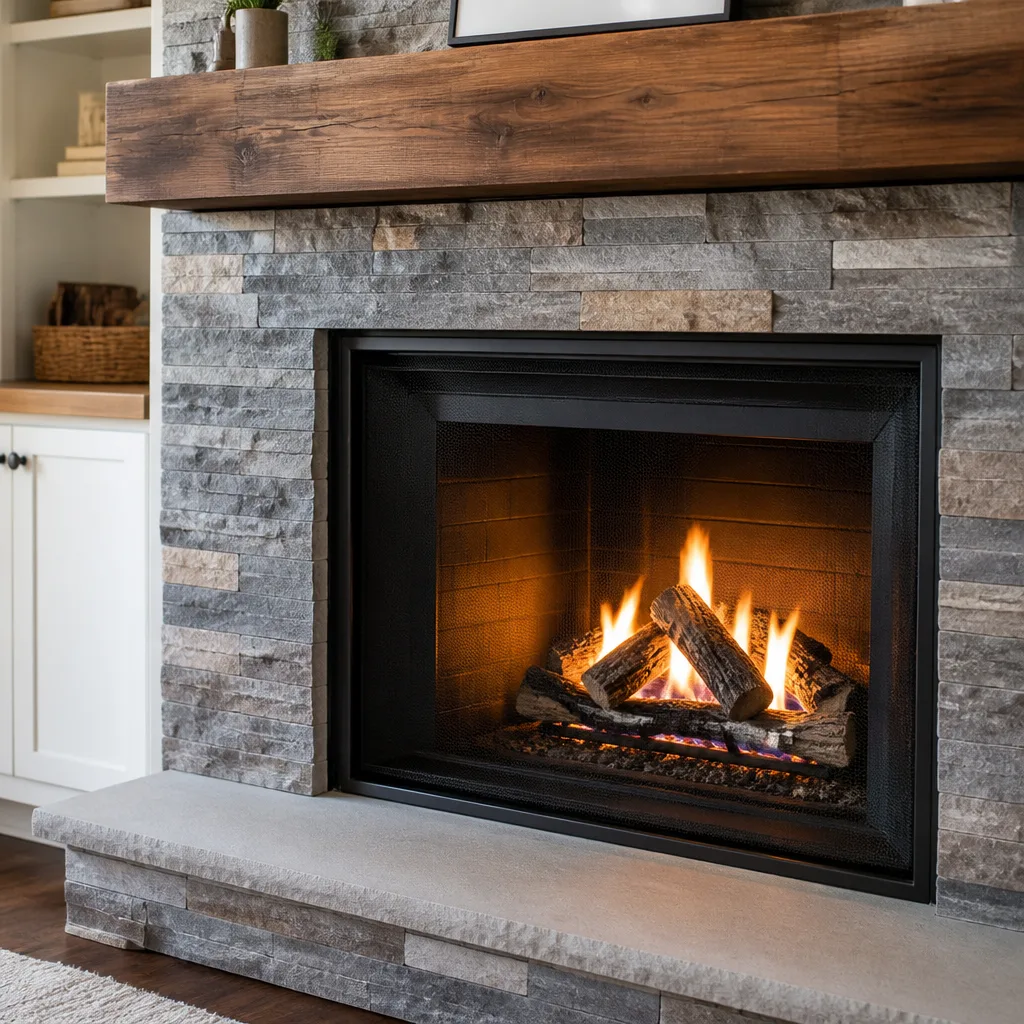
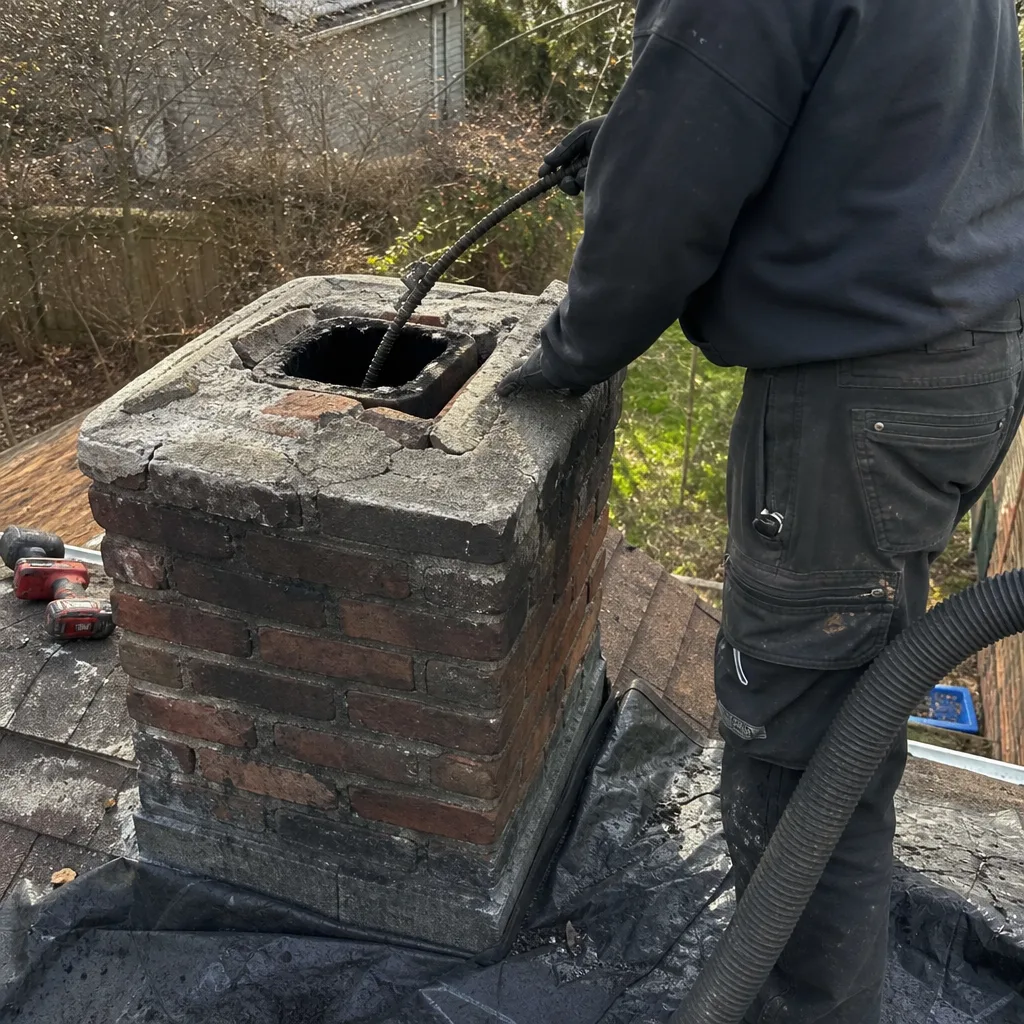 Before
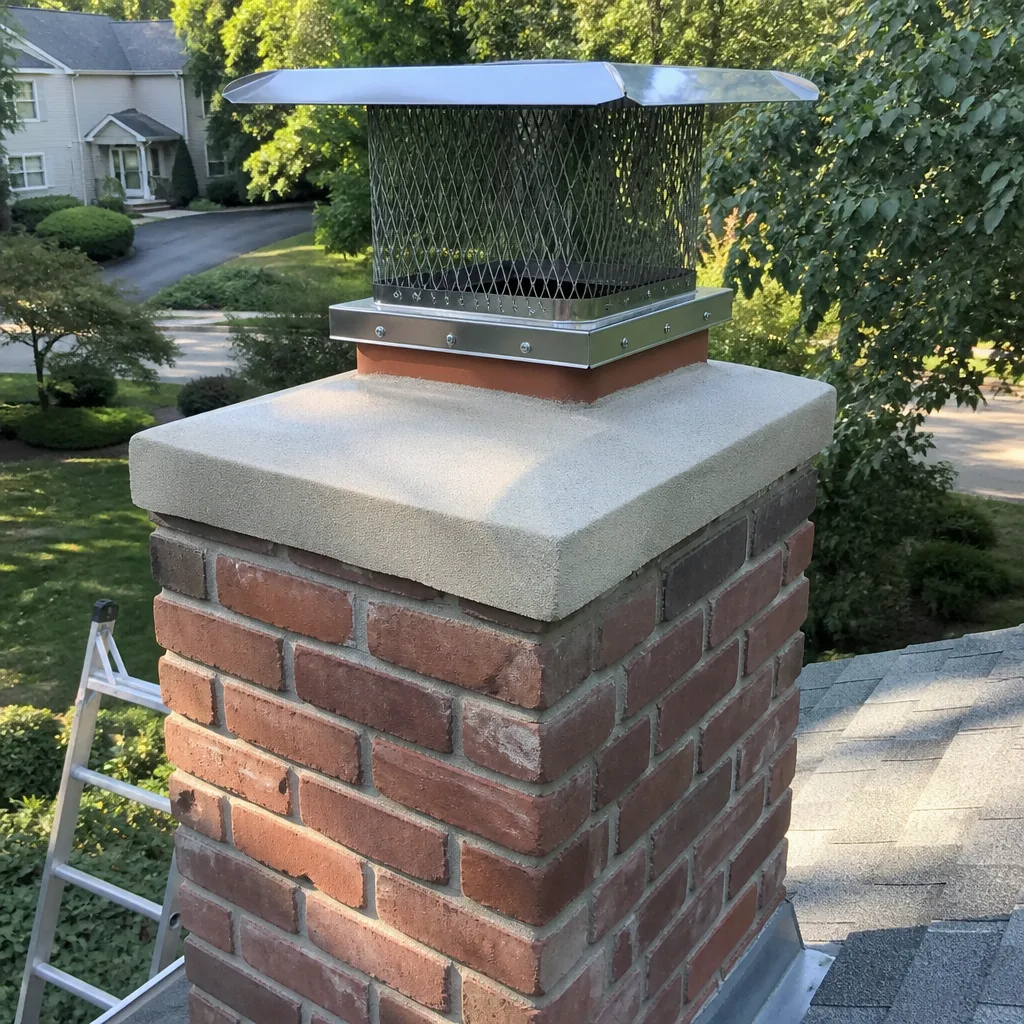 After
After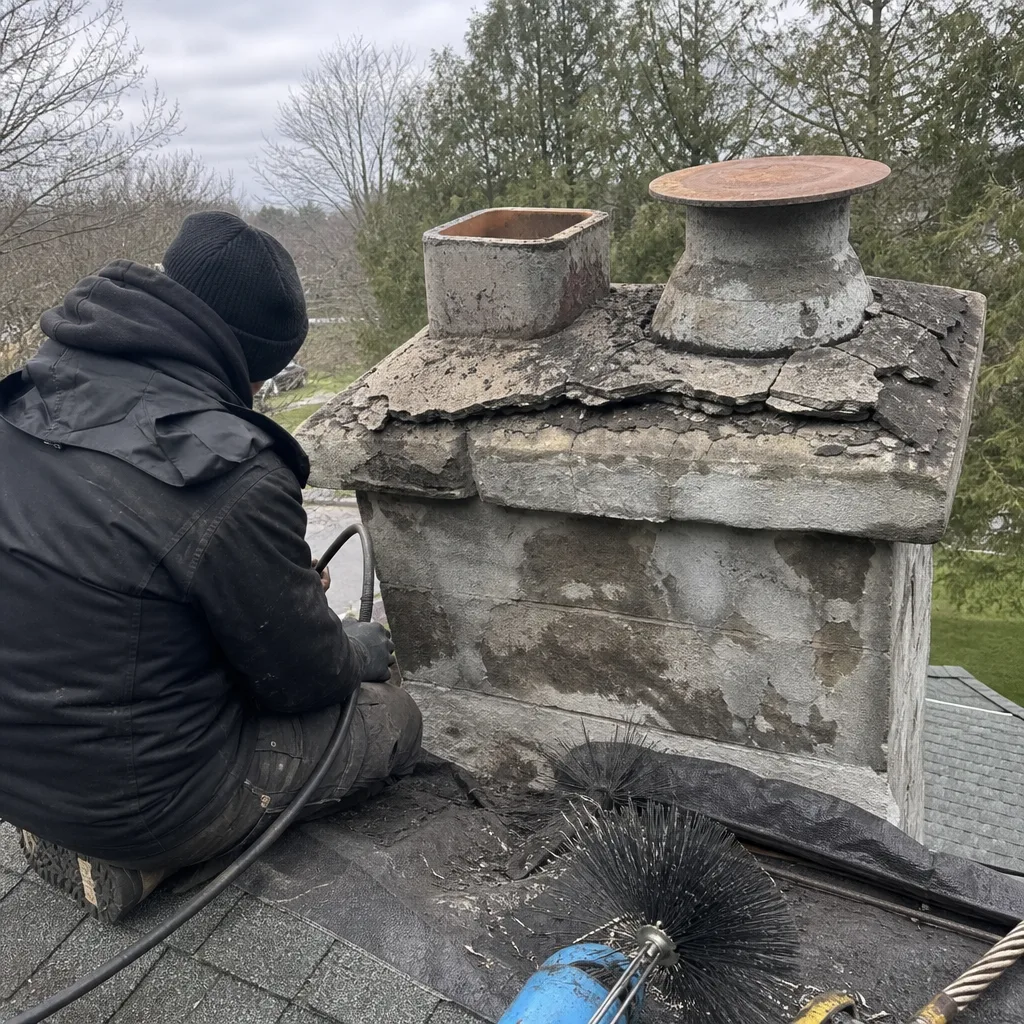 Before
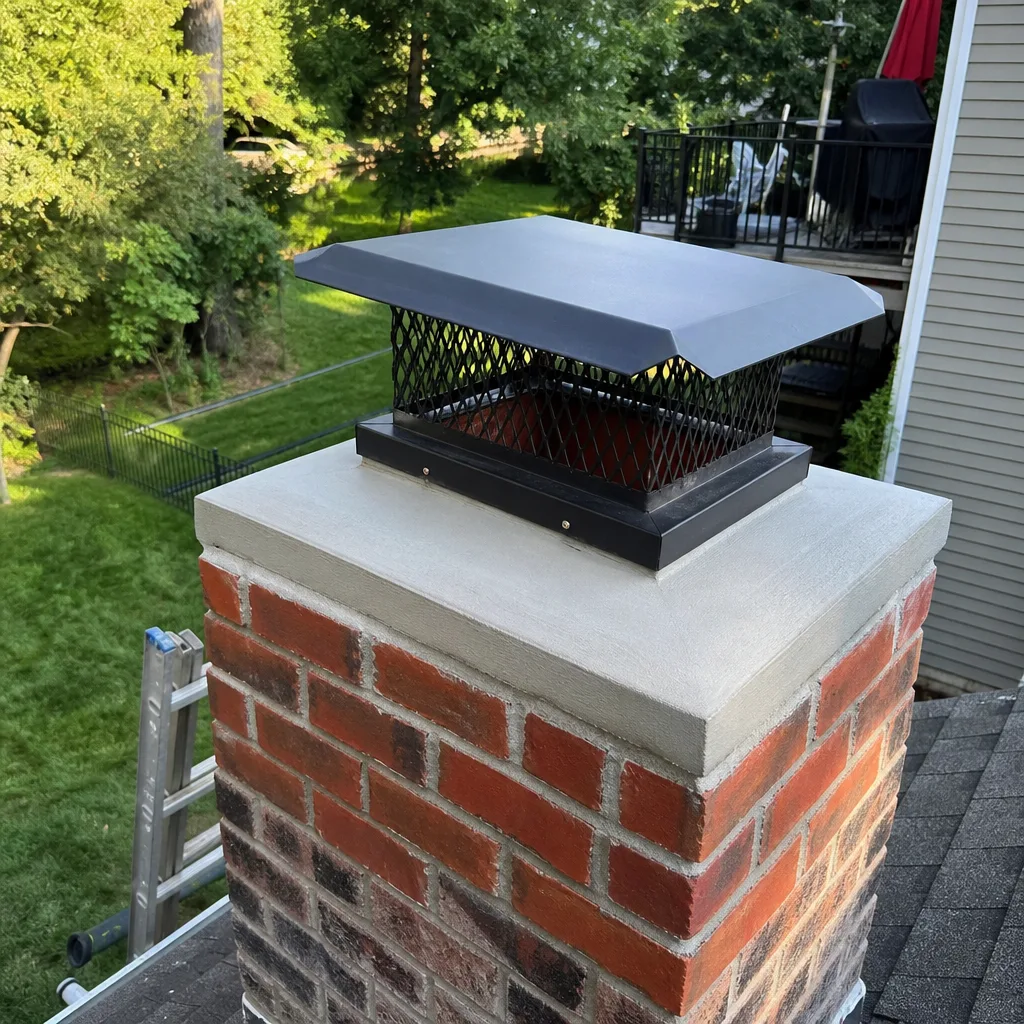 After
After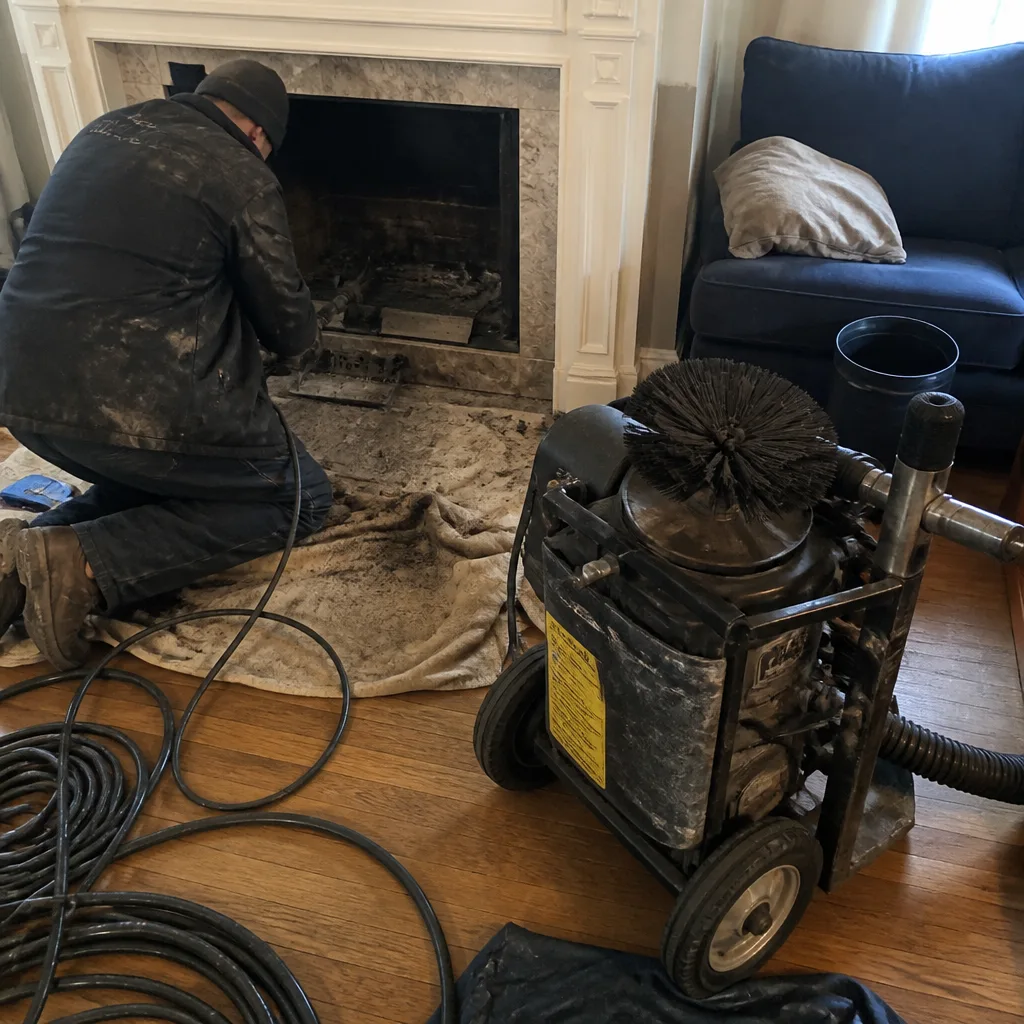 Before
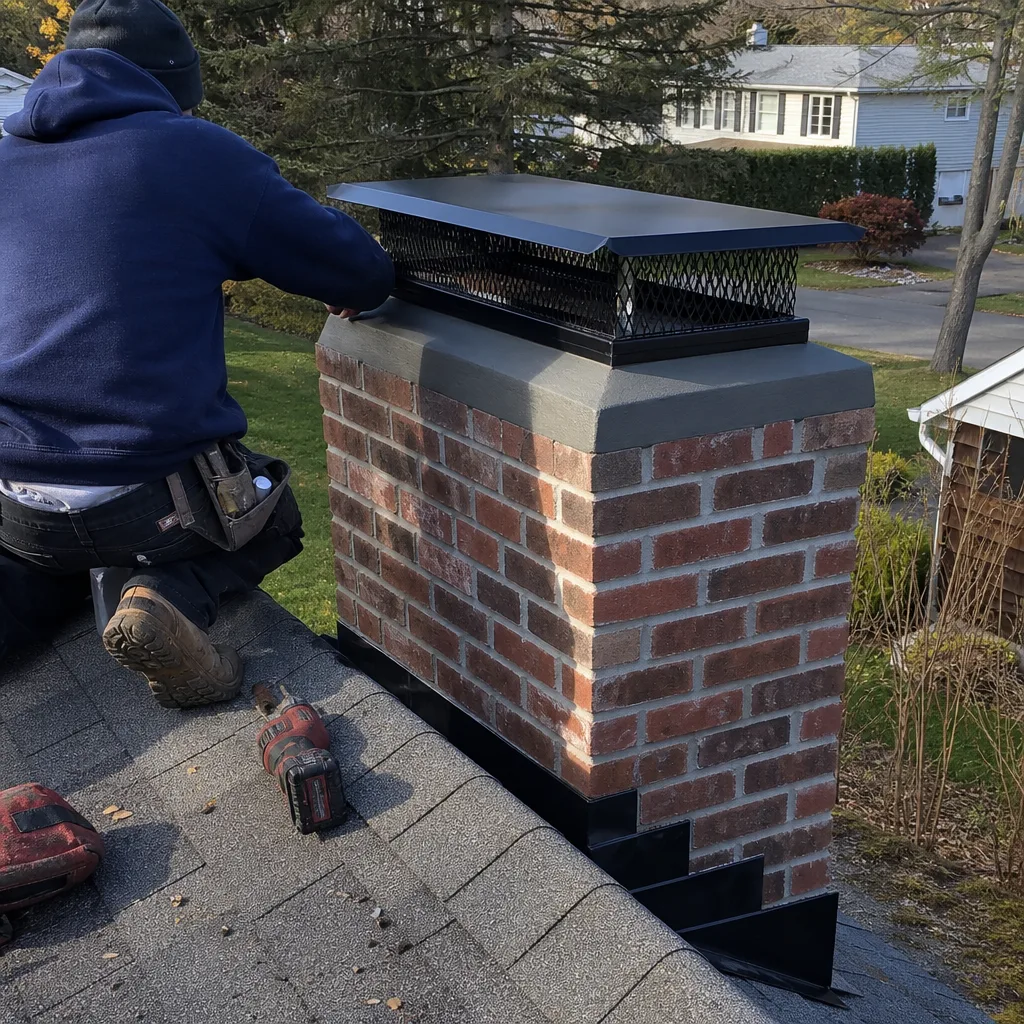 After
AfterCreosote Removal in White Plains, NY
Creosote removal in White Plains typically runs $150 to $800, depending on how much has built up and what class it’s reached – with Class III glazed creosote requiring chemical treatment before any brush can touch it. Most appointments are same-day or next-day, and every job starts with a camera inspection down the flue so we can show you exactly what we’re dealing with before quoting a dollar. Our Chimney Cleaning & Sweep services cover everything from routine maintenance to heavy buildup removal.
If you burn wood in White Plains, creosote is accumulating in your flue. That’s not a scare line – it’s chemistry. Every fire produces combustion byproducts: water vapor, unburned gases, wood particles. They rise, cool against your flue liner, and deposit. Over time those deposits harden, glaze, and become fuel. A Class III creosote fire burns at temperatures above 2,000°F, hot enough to crack a terracotta liner and push flames into your framing. We’ve seen it happen in homes on Battle Avenue, in the Tudor-style builds near the Gedney Park area, and in the older colonials throughout the Fisher Hill neighborhood – chimneys that looked fine from the firebox until the camera went down.
Level Two Chimney White Plains has documented and cleaned more than 38,000 chimneys since 2009, every one with a written price before work started and a photo record when it was done. That documentation practice – camera scan, written findings, written price, written warranty – isn’t an upgrade here. It’s how we work on every visit, under Clause 4 of the Haven Standard. Our parent service page covers the full scope of what we do: Chimney Cleaning & Sweep in White Plains. Or call us directly at (914) 350-5204 – a live person picks up, any hour.
When You Need Creosote Removal
Creosote doesn’t announce itself politely. Here are the specific conditions that tell us a removal appointment – not just a routine sweep – is what a White Plains home needs:
- You smell a sharp, tar-like odor when the fireplace is idle. That smell is third-degree creosote off-gassing through hairline cracks in the liner. In White Plains homes with older clay tile flues, those cracks often exist before any odor appears – which is why camera documentation catches it before the nose does.
- Your last sweep found “significant buildup” but didn’t specify the class. Class I (dusty soot) and Class III (shiny, tar-like glaze) require completely different removal methods. If a prior company didn’t tell you which class was present, you don’t have a full picture.
- You burn primarily green or unseasoned wood. White Plains sits in a zone where many homeowners source cord wood locally and burn it the same season. Unseasoned wood produces far more creosote per fire than properly dried hardwood – we see this pattern constantly in neighborhoods along North Broadway and the Gedney Farms area.
- Your fireplace has been dormant for two or more seasons. Creosote that sits without airflow becomes progressively harder and more glazed. Homes that go unused for a winter or two then reactivate a fireplace without inspection are a common call we get in White Plains each fall.
- You’ve had a chimney fire – even a small, fast one you may not have noticed. Many low-level flue fires go undetected. Signs include gray or puffy creosote, cracked tiles visible through the firebox, or a smoke smell that doesn’t resolve. These require a Level 2 inspection before the fireplace can be used again.
- Your camera scan shows buildup at or above 1/8 inch. NFPA 211 calls for cleaning at that threshold. If no one has put a camera down your flue in the last two years, you’re guessing, not inspecting.
Our Creosote Removal Process
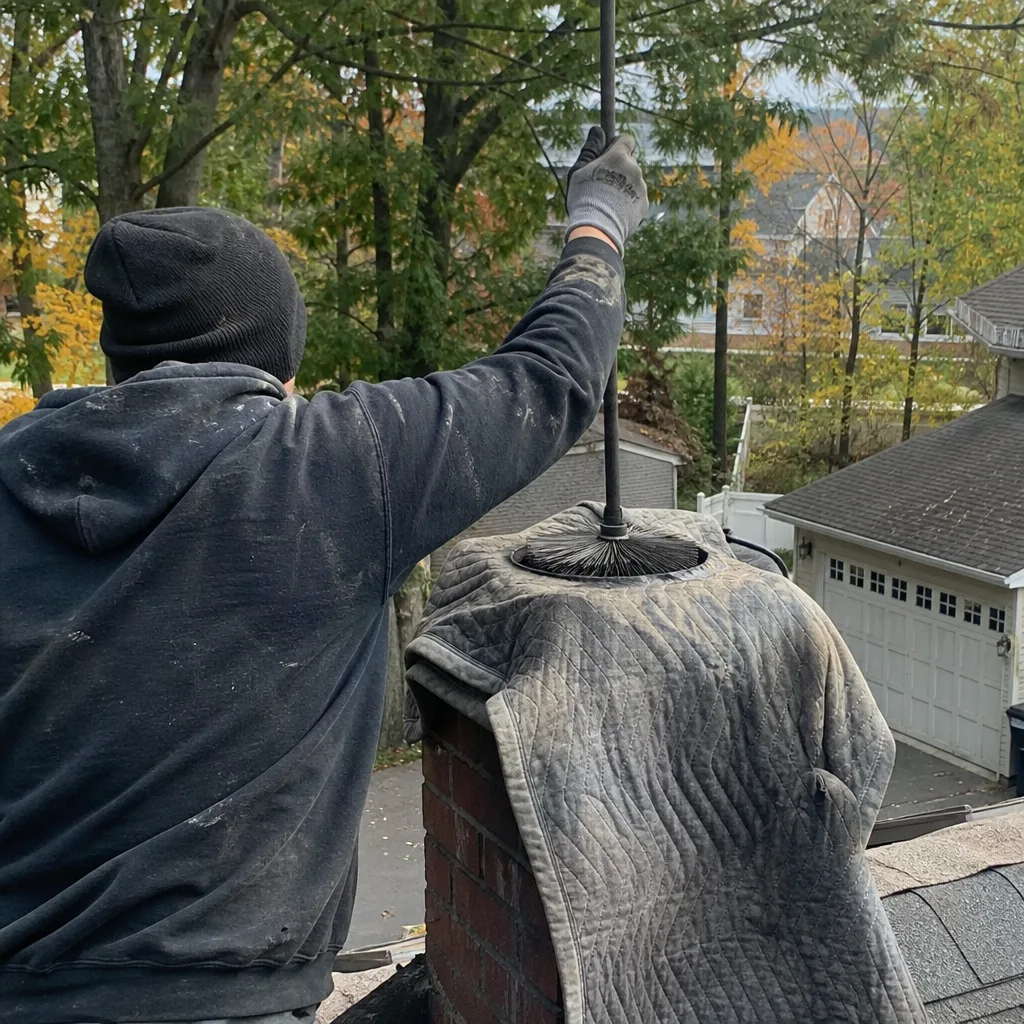
What we do in your White Plains home isn’t a standard sweep with a wire brush and a hope. The class of creosote determines the method, and the method is selected after the camera is down – not before. Here’s the sequence:
-
Camera inspection before anything else.
A NFPA 211 Level 2 camera scan goes down the flue from the top before we quote or clean. We document the liner condition, the creosote class, and any structural concerns in the smoke chamber or firebox. You see the footage. This isn’t an add-on – it’s Clause 4 of the Haven Standard and it’s included in every visit. It’s also the step that prevents us from quoting a standard sweep when what you actually have is a Class III situation that a brush alone won’t touch. -
Written price delivered before work begins.
After the camera is up, we write the scope, the price, and the warranty on paper and hand it to you before anyone picks up a brush. That’s Haven Standard Clause 1 – not a formality, the actual contract. No after-the-fact “it was worse than expected” add-ons. -
Class-matched removal method selected.
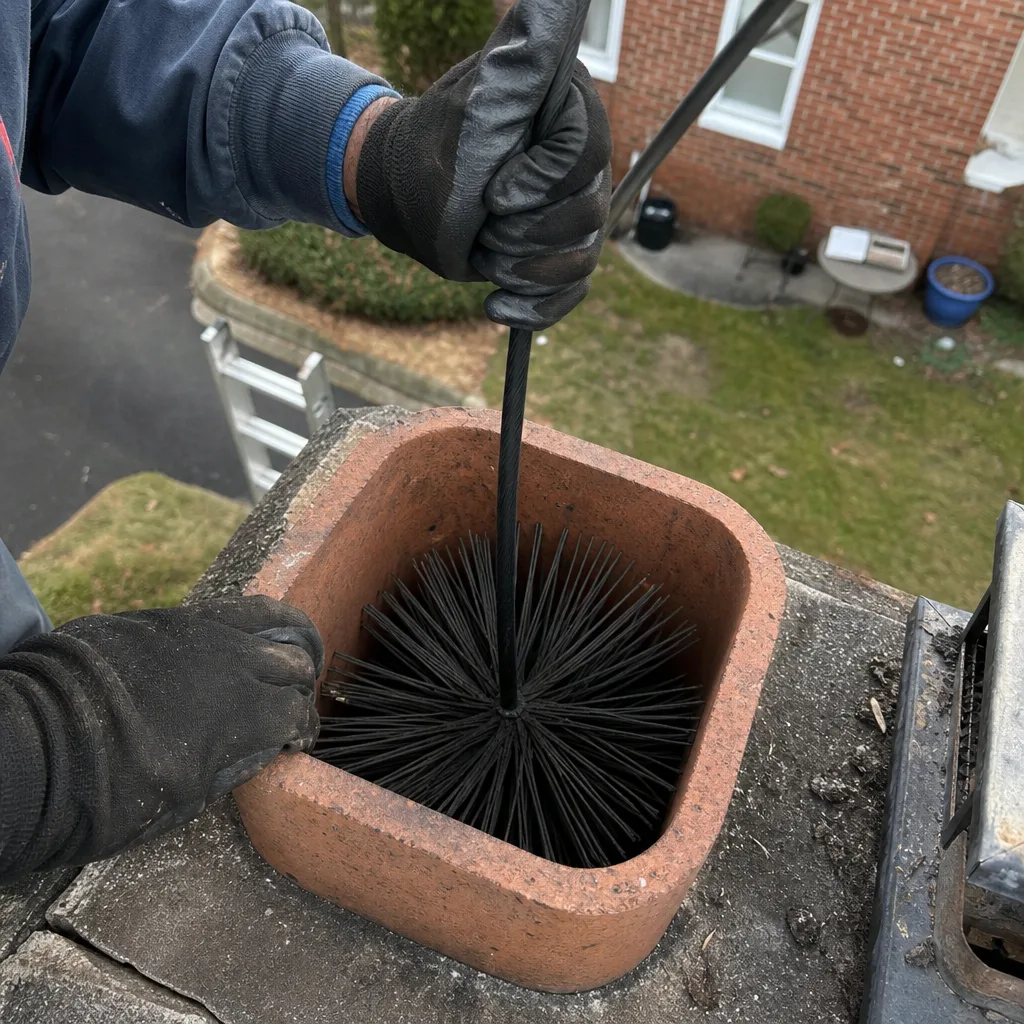
Class I and light Class II creosote is removed with professional rotary brushes sized to your flue liner dimensions. Heavier Class II deposits get a chemical catalyst applied first – the product breaks down the structure of the creosote, making mechanical removal effective and complete. Class III glazed creosote requires a dedicated chemical treatment (often over multiple sessions) before any brush is useful. We use professional-grade products sourced through Haven’s buying network – the same network that brings in materials from Copperfield and Olympia Chimney – and we don’t rush the chemistry. -
Full containment and cleanup in the firebox and hearth area.
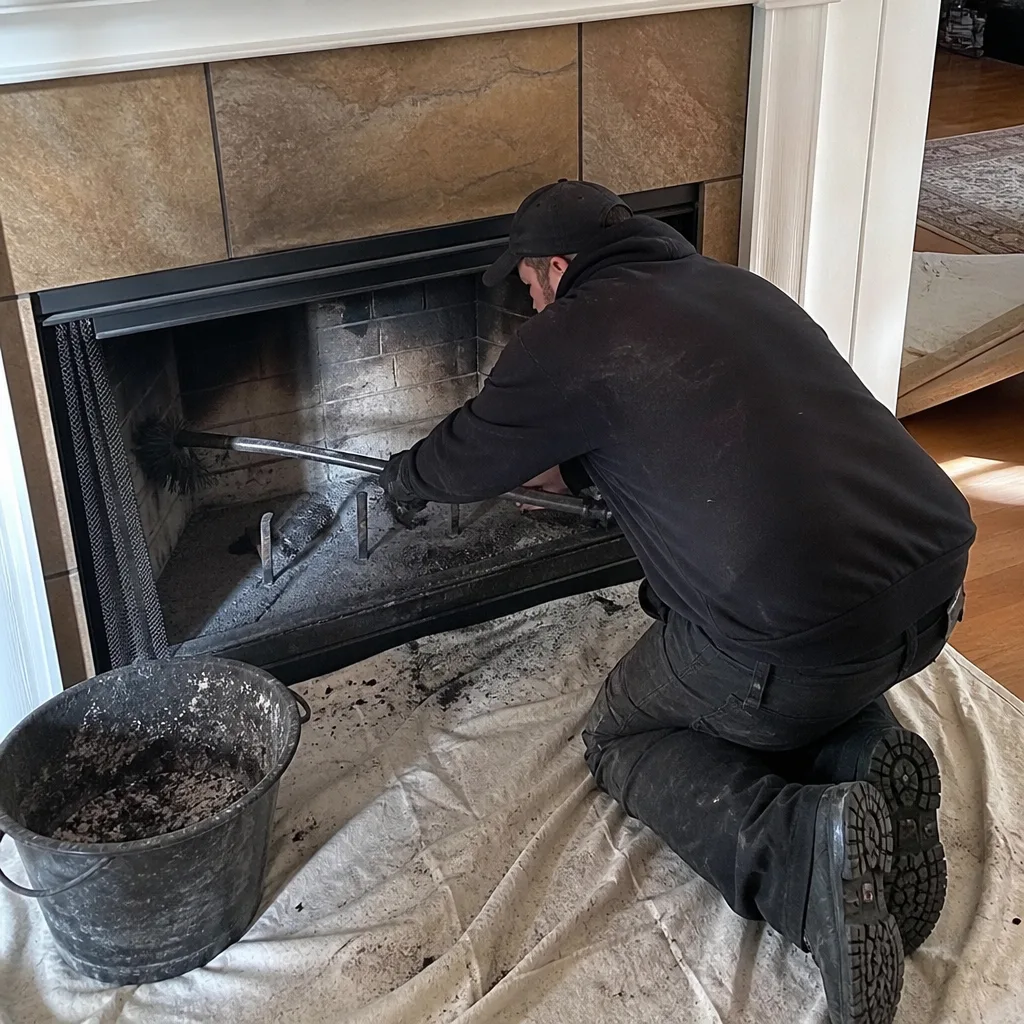
Drop cloths go down before the first tool comes in. Negative pressure is maintained in the firebox during removal so debris doesn’t migrate into the living space. White Plains homes often have open floor plans directly adjacent to the hearth, and we treat that accordingly. When we leave, the firebox looks cleaner than when we arrived. -
Post-removal camera pass.
After removal, the camera goes back down. We verify the flue is clear and document the post-removal condition. You get the before-and-after photo record – both sets of images, both in writing – as your permanent file. If anything in the liner warrants attention (cracked tiles, spalling, gaps at the mortar joints), it’s noted in the written report with a separate, optional quote. Nothing is bundled in without your sign-off. -
Written closeout documentation handed to you before we leave.
The completed scope, the photo record, and the 365-Day Done Right Promise documentation go with you. If anything isn’t right within 365 days of the job, we come back and make it right – no argument, no requalification.
BeforeAfterCreosote Removal Pricing in White Plains
Creosote removal in White Plains costs between $150 and $800 in most residential cases, with the range driven almost entirely by creosote class and flue access. Here’s how that breaks down:
| Service | Typical Range (White Plains) | Notes |
|---|---|---|
| Class I creosote sweep (routine) | $150 – $275 | Dusty, flaky deposits; single-pass rotary brush removal |
| Class II creosote removal | $275 – $450 | Tar-like, sticky buildup; may need chemical pre-treatment |
| Class III glazed creosote removal | $450 – $800+ | Hard, shiny glaze; chemical treatment required; often 2 sessions |
| Camera inspection (included) | Included on every visit | Before and after; documented photo record per Haven Standard Clause 4 |
A few factors specific to White Plains homes affect where your job lands in those ranges:
- Flue height and configuration. Many White Plains homes built before 1970 have taller, multi-story chimneys with narrow clay tile liners. A taller flue with restricted access takes longer and may require additional tooling. We price this honestly upfront.
- Number of flues. Homes with combined heating and fireplace flues sharing a single chimney stack – common in the North White Plains area – need each flue assessed and priced separately.
- Time since last service. A flue cleaned annually accumulates far less than one left for four or five seasons. Longer intervals push costs toward the higher end of each class range.
- Chemical treatment sessions. Class III jobs sometimes require a first-session chemical application, a waiting period of two to four weeks, and then a second removal appointment. When that’s the case, we tell you before session one and price both sessions in writing.
Every estimate is free, every price is written before work begins, and if you’ve already received a written estimate from another company, bring it – we’ll give you a free second opinion on what it covers and what it doesn’t. Call (914) 350-5204 to schedule.
FAQs – Creosote Removal
How much does creosote removal cost in White Plains, NY?
Creosote removal in White Plains runs $150 to $800 for most residential jobs, depending on the class of creosote present and the configuration of your flue. Class I dusty deposits at the low end, Class III glazed buildup at the high end – sometimes requiring two chemical treatment sessions. The camera inspection to determine the class is included on every visit, so you have a documented answer before we quote anything. Call (914) 350-5204 for a free estimate; we’ll give you the price in writing before a single brush goes in.
What is Class III creosote and why is it dangerous?
Class III creosote is the hardest, most concentrated form of creosote deposit – shiny, tar-like, and in some cases almost glass-like in texture. It’s dangerous because it ignites at lower temperatures than the deposits it formed from, burns at extreme heat (above 2,000°F in a full chimney fire), and can’t be removed with a standard brush. Chemical treatment is required first to break down the structure. We see Class III most often in White Plains homes where soft or green wood was burned consistently, or where chimneys went uninspected for multiple seasons. A camera scan identifies it definitively – a flashlight inspection does not.
Can you remove creosote in one visit, or does it take multiple appointments?
Class I and Class II creosote is removed in a single visit in the vast majority of cases. Class III glazed creosote usually requires at least two appointments: a chemical treatment session, a waiting period (typically two to four weeks), and then mechanical removal. When a two-session job is what the camera findings indicate, we tell you before session one and give you written pricing for both. We don’t start a chemical treatment and then surprise you with a second invoice.
How often should I have creosote removed in a White Plains home?
NFPA 211 calls for an annual inspection of any chimney in use, and cleaning whenever deposits reach 1/8 inch – which, for active Fireplace Cleaning situations in White Plains, typically means once per year. White Plains winters push residents toward heavier fireplace use from November through March, and that sustained burn season is exactly when deposits accumulate fastest. If you’re burning two or more times a week during cold months, a mid-season check isn’t excessive. The camera record from each visit gives you a baseline to compare against – that’s one of the reasons we document every inspection under Haven Standard Clause 4.
What Sets Level Two Chimney White Plains Apart on Creosote Jobs
A lot of sweep companies in the White Plains area will run a brush through a flue and call it clean. What they’re not doing is putting a camera down first to verify the class of what’s there, writing the price before the brush goes in, or documenting the before-and-after condition in photos you can keep. Those aren’t extras here – they’re the baseline on every visit, regardless of how simple or complex the job turns out to be.
Corrine Halstead built Level Two Chimney White Plains on the premise that a homeowner should never have to take a technician’s word for what was found in their flue. When conditions warrant deeper evaluation, we also offer a Level 2 Inspection for complete documentation. You get the camera footage, the written findings, the written price, and the written warranty. That’s the Haven Standard, and it’s been in practice here since 2009 – not because regulations require it now, but because it was the right way to work before anyone asked.
The 38,000+ chimneys we’ve documented since opening give us a specific body of knowledge about how chimneys perform in this climate and in this housing stock. White Plains sits in a zone with cold, damp winters that accelerate creosote deposit formation, and many of the homes here were built with fireplace systems designed for different fuels and different burn patterns than what they see today. That context matters when we’re reading a camera scan and writing a scope.
We source materials through Haven’s buying network – Copperfield and Olympia Chimney among them – which keeps supply consistent and costs honest. And our 365-Day Done Right Promise means the job doesn’t end when we leave your driveway. If something isn’t right within a year of the work, we come back and make it right.
Our full scope of chimney services – sweeping, inspection, repair, liner work, and cap and crown – is detailed on our home page if you want a broader picture of what we cover.
Schedule Creosote Removal in White Plains
If you haven’t had a camera inspection in the last two years, or if you’ve noticed any of the warning signs above – odor, visible glaze at the firebox throat, smoke behavior that’s changed – the right next step is a documented inspection, not a guess. We’ll put the camera down, show you what’s there, write you a price, and do the work if you want it. If you don’t, you still leave with the inspection record.
Call (914) 350-5204 to schedule. A live person answers, any hour. Estimates are free, prices are written before work starts, and the 365-Day Done Right Promise is on every job we touch in White Plains.
Written by Corrine Halstead, Owner at Level Two Chimney White Plains, serving White Plains.